
Interceptive Orthodontics
Why Early Assessment Can Make a Difference
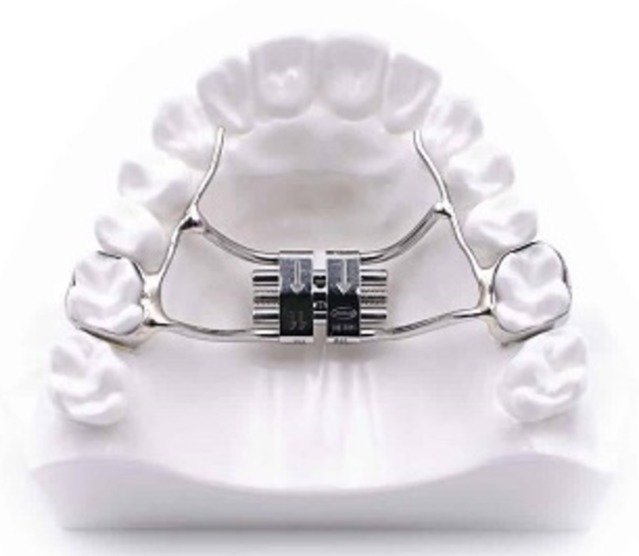
Interceptive orthodontics, often called Phase 1 orthodontic treatment, focuses on identifying and correcting developing dental and jaw problems while a child is still growing.
The aim is not simply to straighten teeth early, but to create the best possible conditions for the permanent teeth and jaws to develop in harmony.
The aim is not simply to straighten teeth early, but to create the best possible conditions for the permanent teeth and jaws to develop in harmony.
Why assess children around age 7?
Around the age of seven, a child’s first permanent molars and incisors have usually erupted, providing an important opportunity to assess how the upper and lower jaws are developing. An assessment at this age does not mean that every child needs orthodontic treatment.
If development is progressing normally, monitoring may be all that is required. Treatment is considered when growth or tooth development begins to deviate from the expected pattern and early intervention could make a meaningful difference.
Why does early intervention matter?
One of the problems we commonly assess is crowding. A particularly important finding is an atretic, or excessively narrow, upper jaw. The upper and lower jaws need to develop in a coordinated relationship. If the upper jaw is too narrow, it may not provide sufficient width for the lower jaw to develop into a stable, well-coordinated bite.
This can be particularly significant in children with a deep bite, where the developing bite relationship may contribute to the mandible developing in a downward and backward direction.
When significant maxillary narrowing is identified and early expansion is indicated, delaying treatment may mean losing an opportunity to influence the developing jaw relationship while the child is still growing. In more severe cases, achieving a full correction later may become considerably more difficult and may require more extensive orthodontic treatment or, in some circumstances, surgical intervention.
Depending on the child’s individual needs, treatment may include appliances such as a Hyrax expander or a Twin Block with palatal expansion incorporated.
What about developing underbites?
Children showing signs of a developing Class III growth pattern require particularly careful assessment and monitoring. Rather than waiting for the problem to become fully established, we monitor growth closely, including changes in the child’s overjet.
Where treatment is indicated, appliances such as reverse headgear may be used, together with other appropriate measures, to influence the developing jaw relationship.
Phase 1 is not meant to last forever
The philosophy of Phase 1 treatment is relatively simple: identify the developmental problem, correct it, normalise development where possible, and then stop.
Treatment commonly takes approximately 9–12 months, although this varies according to the child’s individual problem and response to treatment. Some children will subsequently require comprehensive orthodontic treatment once their permanent teeth have erupted, while others may require significantly less intervention.
At Gentle Dental, children who require Phase 2 orthodontic treatment after completing Phase 1 receive a 10% discount on their Phase 2 treatment.
The important message for parents is that an early orthodontic assessment is not a commitment to braces. It is an opportunity to understand how your child’s teeth and jaws are developing and, when necessary, intervene at the appropriate stage of growth.


